
Targeting Nursing and Undermining Health Equity – Post #1
A Story
The perinatal care in the small rural town had been balancing on the edge of a knife for a long time. Three obstetricians, dedicated to the town, kept it together. Caring primarily for a diverse Medi-Cal population over two counties with two-lane winding roads, people depended on them. Family Practice docs came and went, but often didn’t impress the OBs with their skills. If there were a disaster for any reason: late care, mismanagement, or patients ignoring signs of risk, it would land in the lap of the OBs with little warning. Often, the resources and specialists they needed were a hundred miles away. They became hardened. They did not suffer fools. They were the ones on the line in the middle of the night, trying to save a mother, a baby, or both. When it became really scary, they would support each other, and the three of them would cluster together in the hospital, sharing thoughts, leaving no stone unturned. Their dedication became legendary.
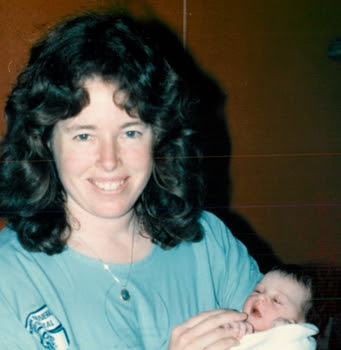
As a relatively young Certified Nurse-Midwife (CNM) who had just come to town, they scared me to death. Word on the street was that they were going after “lay midwives,” trying to get them arrested for practicing medicine. It was potent times. Fortunately, over the previous two years, I had honed my skills at a tough county hospital in Fresno, where I had dealt with every complication in the textbooks. I had a good pedigree from a good Ivy League school. I asked for hospital privileges and begrudgingly received them with a condition of supervision for thirty births. After ten births, we were good. You could see the light bulbs going off over their heads. Maybe there was help on the horizon. Within six months, they employed me. I spoke Spanish, knew how to keep a birth low-key, and listened to what families wanted. The practice exploded. Green light to hire another CNM. We wrote grants for expanded services. We travelled to the next-door county providing prenatal care. We transitioned the potency with the home birth midwives to interprofessional meetings. Green light for a third CNM! It was good until suddenly it wasn’t.
One of the three long-term OBs decided to return to his roots in Southern California. A three-person call rotation is barely survivable with sixty births a month. A two-person call schedule is like a meat grinder. You forget whether you are coming or going. The remaining two OBs looked stricken. The CNMs shifted to full 24/7 coverage, or “every other.” We also began to look stricken. After a few months of that, the decision came down: they would shift the practice to “private pay only” patients. The volume would halve. Our jobs would go away. With the loss of one provider, our beautiful rural perinatal house of cards collapsed. Our Medi-Cal patients, who often were high-risk and didn’t have transportation, would have to travel sixty miles for prenatal care. We had not had time to keep good outcome numbers, but we knew we were headed for trouble.
The county patched together a MediCal OB clinic in the old, collapsing (literally) county hospital. The CNMs did the prenatal care, and any MD in town who thought they knew how to deliver a baby took turns on call. We hired a “high-risk” specialist who showed up for one half-day a week, and we crossed our fingers. Our “OB high-risk specialist,” we soon found out, was running this very lucrative contract practice over a 100-mile radius while having other jobs on the side. He was frequently late, or simply didn’t show up, and insisted that we pack forty high-risk pregnant people into two hours, ten minutes each. My CNM partner and I made sure interval histories were shared, management plans were communicated clearly, and outside testing and transportation were arranged. Education, nutrition counseling, and psychosocial support had gone out the window.
Believe it or not, this situation was luxurious compared to the challenges that many rural and remote perinatal systems face today. Funding is slashed, hospitals are closing, and the distance to receive care has increased exponentially. The pipeline of providers willing to work in these settings is tenuous at best. The sobering, increasing trend in maternal morbidity and mortality related to this dynamic is on every public health professional’s mind. And despite this, in the fall of 2025, the Department of Education is publishing a new interpretation of whether nursing can be considered a profession in the same category as law and medicine. And by promulgating this, the tuition loan money available to graduate nursing students, such as us, when we were learning to be CNMs, will be significantly cut. The pipeline of advanced practice nurses who can tackle these challenges in rural and remote environments will be squeezed. And for what reason? This post and subsequent posts in the coming weeks will examine the reasons behind this potential policy shift, its effects, and what can be done about it.
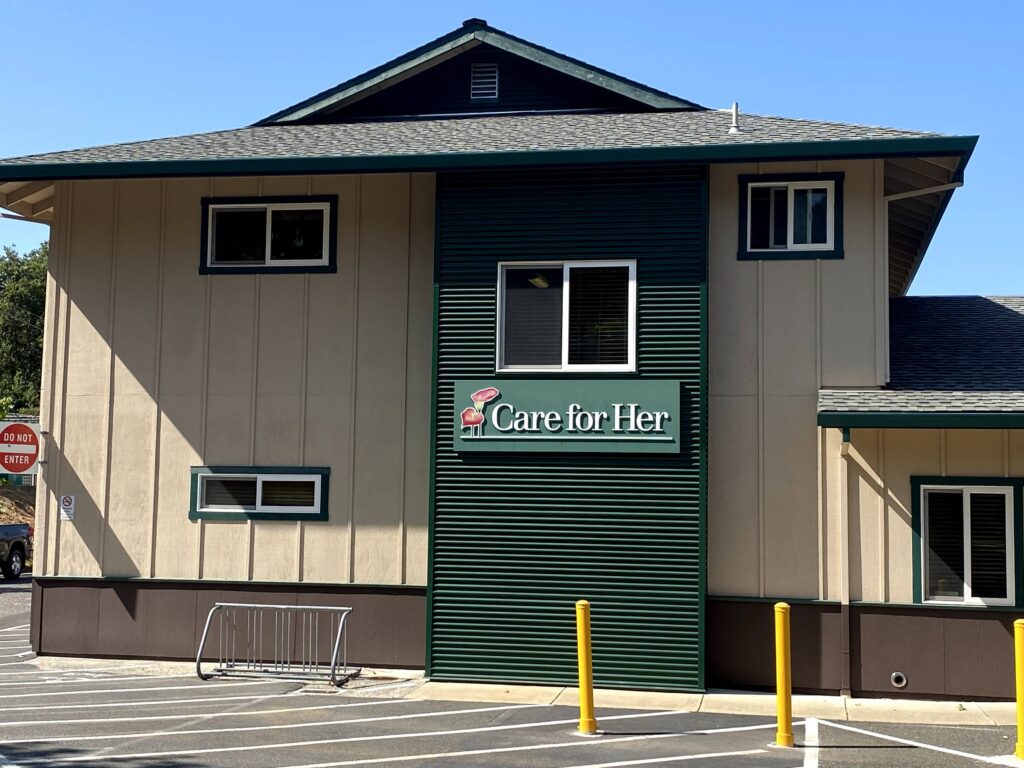
So, what happened to our fragile rural perinatal house of cards after it collapsed? The community organized to bring in a Federally Qualified Health Center (FQHC). This provided the funding and structure to establish a comprehensive perinatal service based on a CNM model, which is still in practice today, thirty years later. By employing at least twelve advanced practice nurse providers (CNMs and others), the situation was no longer balanced on the edge of a knife. Let’s consider these dynamics in greater detail.
Healthcare in Rural and Remote Environments
The World Health Organization (2010) notes that health inequities in rural and remote settings arise from challenging social and environmental determinants that disproportionately affect rural populations. These include poverty, less access to education, lack of transportation, underinsurance, and social isolation, among others. Who also notes that health systems are weaker and lack stability, as noted in the story above.
The Centers for Medicare & Medicaid Services (2022) explicitly focuses on health equity as a policy goal in rural and remote communities, compared to urban areas, where health outcomes have been shown to be poorer and where many have limited access to care.
Critical Advanced Practice Nursing Roles
National Academies of Sciences, Engineering, and Medicine (2021) note that advanced practice nurses are explicitly prepared in primary and preventive care. Their focus includes community-based practice, with an emphasis on social determinants of health and on systems leadership and care coordination.
The Agency for Healthcare Research and Quality (2020) recognizes that nurse practitioners are more likely to practice in rural areas, deliver comparable or better primary care outcomes, and improve access, continuity, and patient satisfaction.
Implying a Lack of Professionalism
While this workforce pipeline of advanced practice nurses offers obvious solutions to challenges in rural and remote areas, the sudden targeting of nursing’s professional status and the resulting potential decrease in educational funding came as a surprise in the fall of 2025. As future blog posts will describe, nursing has undergone a focused transition from an occupation in the mid-1800s to a trusted profession that meets the criteria most ethicists and commentators use to describe a profession (Bixler & Bixler, 1959; Henderson, 1966). Not only does this implication of a change in nursing’s status threaten a critical workforce pipeline, but it also casts a shadow over the entire nursing profession, a dynamic that has undermined it for decades. The video below offers the evening news version of the issue to consider how popular media frames it (Nursing Leaders Warn New Federal Loan Rule Could Worsen Workforce Shortages [Video], 2026). We will explore the history of nursing as a profession, specific policy documents, and arguments related to this issue in future posts.
References
Agency for Healthcare Research and Quality. (2020). The roles of nurse practitioners and physician assistants in rural health care. U.S. Department of Health and Human Services.
Bixler, G. K., & Bixler, R. W. (1959). The professional status of nursing. American Journal of Nursing, 59(8), 1142–1146.
Centers for Medicare & Medicaid Services. (2022). Advancing rural health equity. U.S. Department of Health and Human Services.
https://www.cms.gov/files/document/fy-2022-advancing-rural-health-508.pdf
Henderson, V. (1966). The nature of nursing: A definition and its implications for practice, research, and education. Macmillan.
National Academies of Sciences, Engineering, and Medicine. (2021). The future of nursing 2020–2030: Charting a path to achieve health equity. The National Academies Press.
https://doi.org/10.17226/25982
Nursing Leaders Warn New Federal Loan Rule Could Worsen Workforce Shortages [Video]. (2026, January 16). YouTube. https://www.youtube.com/watch?v=kADjOsZgkcw (YouTube)
World Health Organization. (2010). Increasing access to health workers in remote and rural areas through improved retention: Global policy recommendations. World Health Organization.
https://www.who.int/publications/i/item/increasing-access-to-health-workers-in-remote-and-rural-areas-through-improved-retention

Deborah Acker
Deborah Acker, JD, DNP, MSN, CNM, FACNM | Healthcare Systems & Workforce Innovation | Education | Clinical, Legal & Academic Integration | Rural & Perinatal Care


6 Comments
Hana Malkoc
Deborah, your story is so powerful and inspiring. I couldn’t stop reading it! It is very unfortunate what our rural communities go through to get specialty care, or any care in general, for that matter. I did AHEC for 2 years and spoke with many community members in a rural town in Southern Arizona; they are still struggling. I remember them mentioning how many new graduates will come to work at their community health center, and then, once their loan-reimbursement window is over, they leave. This leaves community members confused, unsure whether they can connect with their health care provider, since they know they won’t be there for long. It creates some distrust, I think. I cannot imagine how it must be for the perinatal side of things, because I am sure many patients feel more comfortable having the same provider throughout their pregnancy and knowing who is going to deliver their baby. This is what I thought of when you mentioned the OB leaving the rural community, and the shift in care and responsibility that caused. I was saddened to hear they switched to private-pay, especially given how many people in rural communities rely on federal programs like Medicaid and Medicare for their healthcare. This just adds another layer to the many social determinants of health this population faces. It reminded me of some of the class readings about how fragile access to care can be when market forces are allowed to dictate who receives services and who does not. The foundational idea in U.S. health policy is that the government has a responsibility to intervene when markets fail to meet the needs of vulnerable populations. That is precisely why we have these programs. And it sounds like that happened with your rural community, through organizing for a Federally Qualified Health Center, which was great to hear. Access to care is not just an individual responsibility, but a collective one.
I agree with you that advanced practice nurses act as a stabilizing force in these settings. With the new declarations that nursing is no longer a “professional” degree, it leaves me speechless each time. What is nursing then, if not professional? We already have a shortage of nurses, and this will further exacerbate it. I worry about these rural communities and the smaller number of providers who get the chance to work with them.
I look forward to reading more of your blog posts and what you think should be done.
Deborah Acker
Hana,
Thank you so much for your comprehensive comment. I admire your dedication to the AHEC program. I truly believe that it is in more isolated places that you can really learn your craft and understand the critical community and population dynamics.
I hope you return to rural practice someday. And I look forward to what I am going to say in the next few posts, also! I’m figuring that out now. 🙂
With appreciation and admiration,
Debbie
Heather Ross
Thank you, Deborah, for this detailed firsthand account of the critical role of advanced practice nurses in rural communities. It would be informative to understand how many similar communities across the United States (representing how many and what percentage of the American public) similarly rely on advanced practice nurses to deliver care. Similarly, it would be helpful to understand how well (or thinly) the current flow of the advanced practice nurse pipeline is meeting the healthcare needs of rural Americans. I look forward to your upcoming posts. -HMR
Deborah Acker
Thank you. Great suggestions. I will add to the next post.
DA
Ahguthri@asu.edu
Deborah, I heard your pitch to us to carry the torch of professionalism in our practices during immersion, and I said I want to read your blog. She is going to teach me! Thank you for sharing your journey to uphold the quality and equity of care to rural perinatal population! Your experience and expertise have moved mountains.
I joined the AANP 8-10 regional meeting on Saturday morning (1/25/2026). I want to be prepared for the Health Policy Conference in Washington, D.C., in February. Frank Harrington reported that there are about three bipartisan bills to reinclude post-baccalaureate nursing and other allied health as a professional degree, as well as language amendments to the Department of Education’s Reimagining and Improving Student Education (RISE) Committee’s changes to the student financial aid provisions under Public Law 119–2. This gives me hope, but I know that these systems are slow. This will affect nurses entering their master’s and doctoral programs and delay their ability to meet the nation’s population needs. It is doubly troubling that these are delays on an already handicapped and defunct system of providing care to rural communities. When I was doing my project on depression in Arizona, I came upon the fact that 65% of Arizona is medically underserved, and two counties are maternity care deserts (Arizona Department of Health Services, 2024). I hear you and your passion. I hope I can bring this to my work as a provider and to my professional activism now. Arizona should not restrict nursing students’ dreams of becoming providers; they need us.
Arizona Department of Health Services (2024). Arizona state health assessment. https://www.azdhs.gov/documents/operations/strategic-initiatives/arizona-state-health-assessment-2024.pdf
Deborah Acker
Thank you so much for your comment. I love that you know exactly where this stands and who is involved. I hope to know these important details within two weeks!
I try to see this time as an opportunity. I think that people on all sides of various positions are so un-moored by the chaos in the country that many are evaluating their fundamental beliefs. It’s a good time to send a strong, well-reasoned, rational message.
I look forward to hearing about your experiences in your travels. I know about the maternity deserts in Arizona. I did a deep dive on that before it became clear my project would be sited in California.
Stay in touch, and again, thanks for your comment.