
Profession, Professional, & Professionalism – Post #2 – Policy Implications
In our last post, we shone a light on the potential threat to funding for graduate nurse education currently unfolding over the question of whether nursing is strictly defined in regulatory language as a profession. Graduate nursing education prepares advanced practice nurses who provide a significant percentage of providers in rural and remote settings. Bartnes et al. (2018) found nurse practitioners (NPs) constituted 25.2 percent of providers in rural practices, compared to 17.6 percent in 2008. As noted by the American Association of Nurse Practitioners (2024), more than 102 million Americans across the nation currently lack adequate access to primary care – a 3% jump from one year ago (99 million) – and these shortages exist across urban, suburban, and rural areas. NPs represent 1 in 4 primary care providers in rural practices, with a higher percentage in states that allow them to practice to the full extent of their education and clinical training (AANP Spotlights Five Critical Health Care Trends to Watch, 2024). Patel and colleagues (2025) sampled 18,804 NPs, of which one-fifth (19.1%, n = 3,589) worked in rural areas. The rural APRN workforce was, on average, older, less racially diverse, more experienced, and had lower household income than the non-rural workforce. Those who remained in rural jobs were more likely to report that the length of their commute, the cost of living, their commitment to underserved communities, and proximity to family were factors leading to NP retention in rural areas.
To improve perinatal excellence in rural and remote areas, supporting the flow of NPs into the workforce is essential. We examine the dynamics of the current issue threatening graduate nurse (NP) education below. But recognition of Virginia Henderson must come first.
Virginia Henderson
Virginia Henderson played a pivotal role in moving nursing from an occupation defined by task execution to a profession grounded in an independent body of knowledge. By articulating nursing’s unique function—assisting individuals in activities contributing to health, recovery, or a peaceful death—she clearly distinguished nursing practice from medicine and framed it as an autonomous professional discipline. Her work provided the intellectual foundation for professional standards, education, and accountability that remain central to nursing’s claim to professional status (Henderson, 1966).
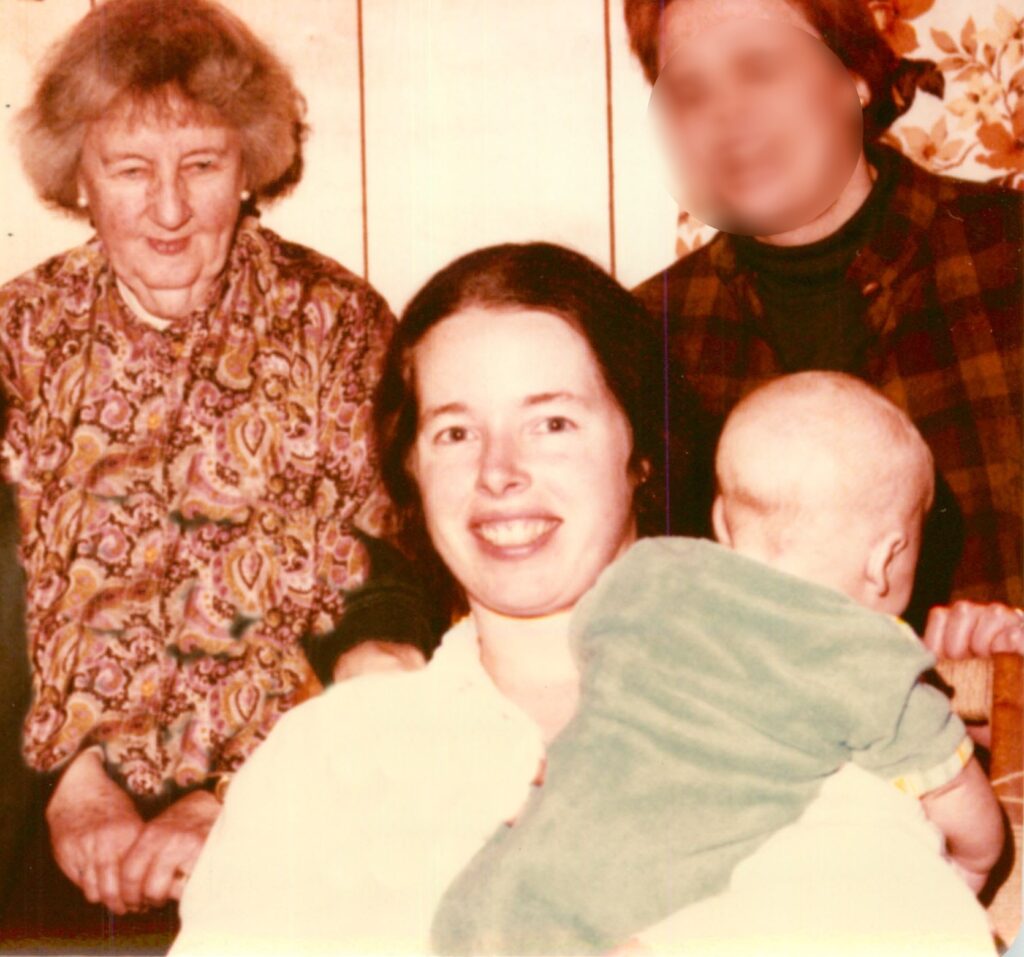
Personally, as a student nurse-midwife, I had the fortune to study in her proximity and appreciate the tremendous value she brought to nursing. Not only was her presence and brilliance an inspiration, but they were also a constant reminder that nursing is a “young” profession and that all nurses, and graduate-prepared nurses in particular, have a duty to support and develop the professional aspects of nursing. A treasured memory is her embrace and celebration of my oldest son.
Policy
The current debate revolves around how the U.S. Department of Education (ED) plans to implement changes required by the One Big Beautiful Bill Act (Public Law 119-21), which amended the William D. Ford Federal Direct Loan Program under Title IV of the Higher Education Act of 1965. Title IV governs federal student aid, including the definition of a “professional degree” used for determining federal loan limits and eligibility under the Direct Loan program. Under the negotiated regulatory language agreed upon by ED and its rulemaking committee, the definition of professional degree in 34 C.F.R. § 668.2 will include only a narrow list of fields (e.g., medicine, dentistry, law, pharmacy, optometry, veterinary medicine, chiropractic, podiatry, clinical psychology, and theology) tied to specific Classification of Instructional Programs (CIP) codes, and does not explicitly include nursing programs such as MSN, DNP, or NP degrees; programs outside those listed would be treated as general graduate programs with lower loan limits and different borrowing caps under Title IV.
The Congressional Research Service (CRS) (2025) report explains how the rulemaking committee conducted its analysis and the implications of its decision. If you would like to understand the issue in depth, this website explains it with the utmost clarity. In the next post, the rulemaking process and process for input will be explained in detail. We are currently in the Public Comment period, which ends on March 2, 2026.
As summarized by the Congressional Research Service (2025), historically, the Higher Education Act of 1965 (HEA) provisions that authorized Direct Unsubsidized Loans and Direct PLUS Loans for graduate and professional students, and their loan limits, used terms such as “graduate student” and “professional student” but did not specify distinct limits for each group. Thus, the annual and aggregate loan limits for Direct Unsubsidized Loans and Grad PLUS Loans were generally applicable to all qualifying graduate and professional students regardless of field of study or credential level. The Secretary has used HEA authority to extend higher loan limits to individuals in certain postbaccalaureate programs of study with exceptionally high costs, at both the doctoral and master’s degree levels. Thus, the proposed change is a sudden, dramatic shift in policy following 50 years of greater flexibility in interpreting “professional.”
Key Policy Actors
The primary decision-makers are the individuals within the Federal Student Aid (FSA) and the U.S. Department of Education’s policy office. The Office of Management and Budget will review the rule for economic impact and regulatory consistency. These would be considered public sector agencies.
The U.S. Congress has statutory and oversight powers, particularly through the Senate Education & the Workforce Committee. They can hold hearings, apply political pressure, and amend the statute later. The House committee is the Committee on Education and the Workforce. Congress is a public sector body, but not an agency.
The Congressional Research Service provides critical analysis, but its role is analytical, not regulatory.
Private Sector Organizations
Those in the private sector include professional organizations. From a narrow perspective focused solely on nursing, the primary organizations include the American Nurses Association (ANA), the American Association of Colleges of Nursing (AACN), the National Organization of Nurse Practitioner Faculties (NONPF), and the American College of Nurse-Midwives (ACNM).
The AACN published its early response to this issue in November 2025. The organization subsequently developed a resource page addressing the issue, which includes a survey summarizing the profound impact of this change, links to sign a petition, links to contact Congressional representatives, links to receive alerts, and an ongoing blog of related news and issues unfolding since November 2025 (AACN Alarmed Over Department of Education’s Proposed Limitation of Student Loan Access for Nursing, n.d.; Proposed Federal Loan Changes for Nursing Students, n.d.).
The Commission on Collegiate Nursing Education (CCNE) has a direct stake in this rulemaking because federal student loan eligibility materially affects enrollment, access, and sustainability of CCNE-accredited graduate nursing programs. A regulatory definition that excludes nursing from “professional degree” status risks undermining accredited programs’ ability to finance advanced practice education, directly impacting the advanced nurse practitioner workforce pipeline.
The American Nurses Association (ANA) and other specialty nursing groups have also issued statements, for example, the ANA and the American Association of Nurse Practitioners. The American College of Nurse-Midwives has joined a Nursing Community Coalition letter. The National Organization of Nurse Practitioner Faculties (NONPF) joined a coalition of other advanced practice groups in submitting a comment.
Universities and higher education organizations, public and private, are engaged on behalf of their graduate programs and students, stressing the impact of loan eligibility and workforce pipeline concerns. Public universities influence policy but do not exercise governmental authority (Proposal to Implement Loan Caps Threatens Access to Professional Degree Programs | Association of American Universities (AAU), 2025).
Stakeholders
All of the entities described above can be considered stakeholders. From a broad perspective, other important stakeholders include graduate nursing students, prospective applicants to advanced practice programs, rural and remote communities, underserved communities, Schools of Nursing, financial aid administrators, hospitals and health systems, state and local public health departments, Federally Qualified Health Centers, state boards of nursing, health equity organizations, and policy institutes. This is a big issue affecting the fundamental well-being of our society, and the list can go on.
Motivation for policy positions on both sides can be debated. On the one hand, the political goal of reducing government size, limiting spending, and “recreating the image of America” is part of the dialogue. What “nursing” represents to some historically may align with subservience rather than empowerment. Opposition to nursing’s autonomy to provide care may reflect an implicit bias among some. On the other side, those opposed to this change cite multiple reasons, individual, group, and societal, that reflect potential harm. Individuals may not be able to pursue their educational goals. Professional nursing organizations see their current trajectory and evolving scope of practice threatened. Those who take a broad view of public health see a primary intervention to improve health equity threatened as described above.
Other policy issues related to this general debate have unfolded across multiple fronts, often concerning professional autonomy, licensing requirements, and tensions with broader healthcare goals, such as Healthy People 2030.
The next post will describe the statutory and regulatory mechanisms related to this issue. Advocacy requires knowledge of the concepts related to “profession.” A brief discussion follows.
Background: What do these words mean?
Profession
A profession is historically defined as an occupation grounded in a distinct body of specialized knowledge, acquired through formal education, and practiced with a high degree of autonomy and ethical responsibility. Classic professions such as law, medicine, and theology emerged early because they controlled entry through education, governed themselves through licensure and codes of ethics, and claimed socially essential work. Over time, modern professions expanded this model to include university-based scholarship, evidence-informed practice, and accountability to the public rather than solely to employers. In this tradition, professional status is not conferred by prestige or custom, but by demonstrable expertise, self-regulation, and a sustained obligation to serve the public good (Abbott, 1988).
Nursing evolved into a profession by developing a distinct body of knowledge, formalized education, and mechanisms of self-regulation aligned with public accountability. Beginning in the late 19th and early 20th centuries, leaders such as Florence Nightingale advanced nursing education beyond apprenticeship, embedding it in universities and grounding practice in science and ethics. Over time, licensure, accreditation, and professional standards established nursing’s autonomy and jurisdiction over complex clinical and public health work. This trajectory mirrors the classic pathway by which occupations historically became recognized professions (Henderson, 1966).
Professional
A professional is an individual who practices within a recognized field of specialized knowledge, acquired through formal education, and exercises independent judgment guided by ethical standards and accountability to the public. Historically, professionals are distinguished by their autonomy in practice, responsibility for self-regulation through licensure or credentialing, and commitment to service rather than mere employment (Abbott, 1988).
Professionalsim
Professionalism is the collective expression of a profession’s values in practice—demonstrated through ethical conduct, competent performance, accountability, and service to the public good. Historically, professionalism reflects how individuals apply specialized knowledge with integrity and autonomy, while upholding standards established by their professional community rather than solely by employers. It is therefore not a personal style or demeanor, but a social contract that governs how expertise is demonstrated on behalf of society (2025 Code of Ethics for Nurses | American Nurses Enterprise, n.d.).
References
2025 Code of Ethics for Nurses | American Nurses Enterprise. (n.d.). Retrieved January 31, 2026, from https://codeofethics.ana.org/home
AACN Alarmed Over Department of Education’s Proposed Limitation of Student Loan Access for Nursing. (n.d.). AACN. Retrieved January 31, 2026, from https://www.aacnnursing.org/news-data/all-news/aacn-alarmed-over-department-of-educations-proposed-limitation-of-student-loan-access-for-nursing
AANP Spotlights Five Critical Health Care Trends to Watch. (2024, January 3). American Association of Nurse Practitioners. https://www.aanp.org/news-feed/aanp-spotlights-five-critical-health-care-trends-to-watch
Abbott, A. (1988). The system of professions: An essay on the division of expert labor. University of Chicago Press.
Barnes, H., Richards, M. R., McHugh, M. D., & Martsolf, G. (2018). Rural And Nonrural Primary Care Physician Practices Increasingly Rely On Nurse Practitioners. Health Affairs, 37(6), 908–914. https://doi.org/10.1377/hlthaff.2017.1158
Congressional Research Service. (2025, December 17). The Department of Education’s Proposed Rule to Define “Professional Student” (CRS Report R48768). https://www.congress.gov/crs-product/R48768
Henderson, V. (1966). The nature of nursing: A definition and its implications for practice, research, and education. Macmillan.
Patel, E., Gillette, C., Ostermann, J., Everett, C., Caviness, D., & Garvick, S. (2025). What drives advanced practice nurses to stay in rural America? Insights from the 2022 National Survey of Registered Nurses. The Journal of Rural Health, 41(4), e70088.
Proposal to Implement Loan Caps Threatens Access to Professional Degree Programs | Association of American Universities (AAU). (2025, November 14). https://www.aau.edu/newsroom/leading-research-universities-report/proposal-implement-loan-caps-threatens-access
Proposed Federal Loan Changes for Nursing Students. (n.d.). Retrieved January 31, 2026, from https://www.aacnnursing.org/policy-advocacy/take-action/nursing-is-a-professional-degree
U.S. Department of Education. (2026, January 30). Reimagining and Improving Student Education: Proposed Definition of a Professional Degree Program (Proposed Rule). Federal Register. https://www.federalregister.gov/documents/2026/01/30/2026-01912/reimagining-and-improving-student-education
Deborah Acker
Deborah Acker, JD, DNP, MSN, CNM, FACNM | Healthcare Systems & Workforce Innovation | Education | Clinical, Legal & Academic Integration | Rural & Perinatal Care


2 Comments
MARLO
Deb,
I have been enjoying your blog posts. Your vast education and experiences make your entries very engaging to read.
As a grad student, I made the two-year commitment to the Rural Health Professions Program (RHPP). Viewing healthcare through the lens of the underserved is truly humbling. The census-designated area where I was assigned didn’t have a clinic, let alone a hospital. The nearest hospital was over 50 miles away, and if there was a snowstorm, they would shut down the roads, not that the majority if residents had cars to begin with. The stories I could tell you from my time there are heartbreaking and made me feel both compelled to action AND helpless.
Prior to my assignment to the area, I was informed that the community used to have ONE clinician who saw patients, a nurse practitioner. He was the lifeline of the community, keeping the residents healthy, and out of the hospital that was too far away to access. Then, one day, he was gone. It had been years since his clinic shut down and there was no one to take his place.
This was occurring prior to the policy limiting loans for “non-professional” degrees. I can only imagine how much more difficult it will be to fill these types of vacancies in the future as the Big Beautiful Bill Act continues to weave its magic.
I’m curious to know your perspective on why these particular career fields were “reclassified,” or in essence, demoted. I have been trying to figure it out, but end up rather stumped. At first, I thought that misogyny might be a factor, as many of the former “professional” degrees were in areas of nursing, education, accounting, etc. (Laws, 2025), which the U.S. Department of Labor classifies as the “most common occupations for women” (2025). However, engineering, an extensively male-dominated field (Patrick et al., 2024), failed to make the cut as a “professional degree,” as well (Laws, 2025).
I am saddened for the future of rural medicine, and fearful that countless residents who inhabit those areas will suffer negative consequences, or even death, from illness, injuries, or afflictions that could have been easily prevented, or treated, if NPs, who also work under the general umbrella of MEDICINE, not just MDs or DOs, were treated equitably.
References:
Laws, J. (2025, November 26). Full list of degrees not classed as ‘professional’ by Trump admin. Newsweek. https://www.newsweek.com/full-list-degrees-professional-trump-administration-11085695
Patrick, A., Riegle-Crumb, C., & Borrego, M. (2024). Examining the gender gap in engineering professional identification. Journal of Women and Minorities in Science and Engineering, 27(1), 31-55. https://doi.org/qrnb
U.S. Department of Labor. (2025, April). Most common occupations for women in the labor force. https://www.dol.gov/agencies/wb/data/occupations/most-common-occupations-women-labor-force
Deborah Acker
Marlo,
Thanks for your reply and kind words. I admire your courage to immerse yourself in rural health. I believe if a program is going to assign you to such a challenging area, they need to provide significant support and strategies to give you some capability to implement improvement strategies on some level. Without knowing the particulars, I will leave that there for now. Yes, it is heartbreaking, and I believe everyone in healthcare needs to rotate through these communities to gain a holistic picture of what is happening within our national community.
(One little piece of advice. If you decided to make a personal investment into a place like you describe that is desperate for expertise and access to healthcare, don’t do it alone. Once you are entrenched in a community, it is draining, you become enmeshed, and supporting your own well-being or stepping back becomes laced with guilt. Find two or three kindred spirits to take on something like this type of challenge together.)
I don’t know how they made the split between “professional” and “not professional.” The general tenor is to reduce government spending wherever possible, so I wonder if they demoted the professions they viewed as lacking sufficient lobbying power or support to fight it. I do believe misogyny may have been the frosting on the cake that cinched the decision. In my experience working behind the scenes, these decisions are often irrational, poorly reasoned, and driven by who is “sitting around the table.” What level of knowledge versus ignorance exists? Who has the loudest voice? What personal history of the decision-makers creates explicit or unconscious bias?
I see a general wave of outrage growing, and it will be interesting to see where this goes.
Thanks again for your comments.