
Dogs, Our Guides to Complexity Leadership
Introduction
As Rustin Moore writes, “Our relationships with animals mirror the biological and emotional dynamics of great leadership. In an era of hybrid teams, AI disruption, and constant noise, humans crave the same things animals do: safety, connection, and belonging.“
Leaders must convey that these are what they (or the organization) provide. Leaders who embody calm and presence rather than command will define the next generation of influence.
Mary Uhl-Bien, who formalized Complexity Leadership Theory, emphasized the relationships within a team. Accompaniment, a leadership style modeled by Paul Farmer, is based on presence and sharing the journey. Our biology is reminding us what traditional leadership textbooks and consultants often forget: we are mammals first, managers second.
Moore also observes that “in the animal kingdom, steady energy leads the group. Wolves, elephants, horses…they all follow the calmest, not the loudest.” Likewise, leaders who manage emotion model equilibrium. When turbulence hits, your steadiness becomes everyone’s anchor.
What are dogs if not steady, present, and compassionate?
Several ideas in this introduction—and in the accompanying video narration—draw inspiration from Rustin Moore, “Pets, Purpose and Power: The Animal Science of Leadership,” Innovative Leadership Institute. https://innovativeleadershipinstitute.com/podcast/s11-ep25-pets-purpose-and-power-the-animal-science-of-leadership/
(1:34)
Trust as the Foundation of Adaptation (not as sentiment, as infrastructure)
Animals don’t respond to hierarchy. They respond to consistency, empathy, and clear intention. As Moore says in Unleashing the Bond, “Animals respond to who we are, not what we claim to be.” In human terms, authenticity creates loyalty. Titles fade; character endures.
Trust allows:
- Psychological safety
- Information flow
- Experimentation and space to innovate
With trust there is:
- Assurance that signals will not change; correction will not be arbitrary.
- Because of that trust, the dog can operate independently and still remain aligned.
- Moore argues that “a leader’s physiology becomes the cultural tone; regulate yourself before you regulate others.”
(58 secs)
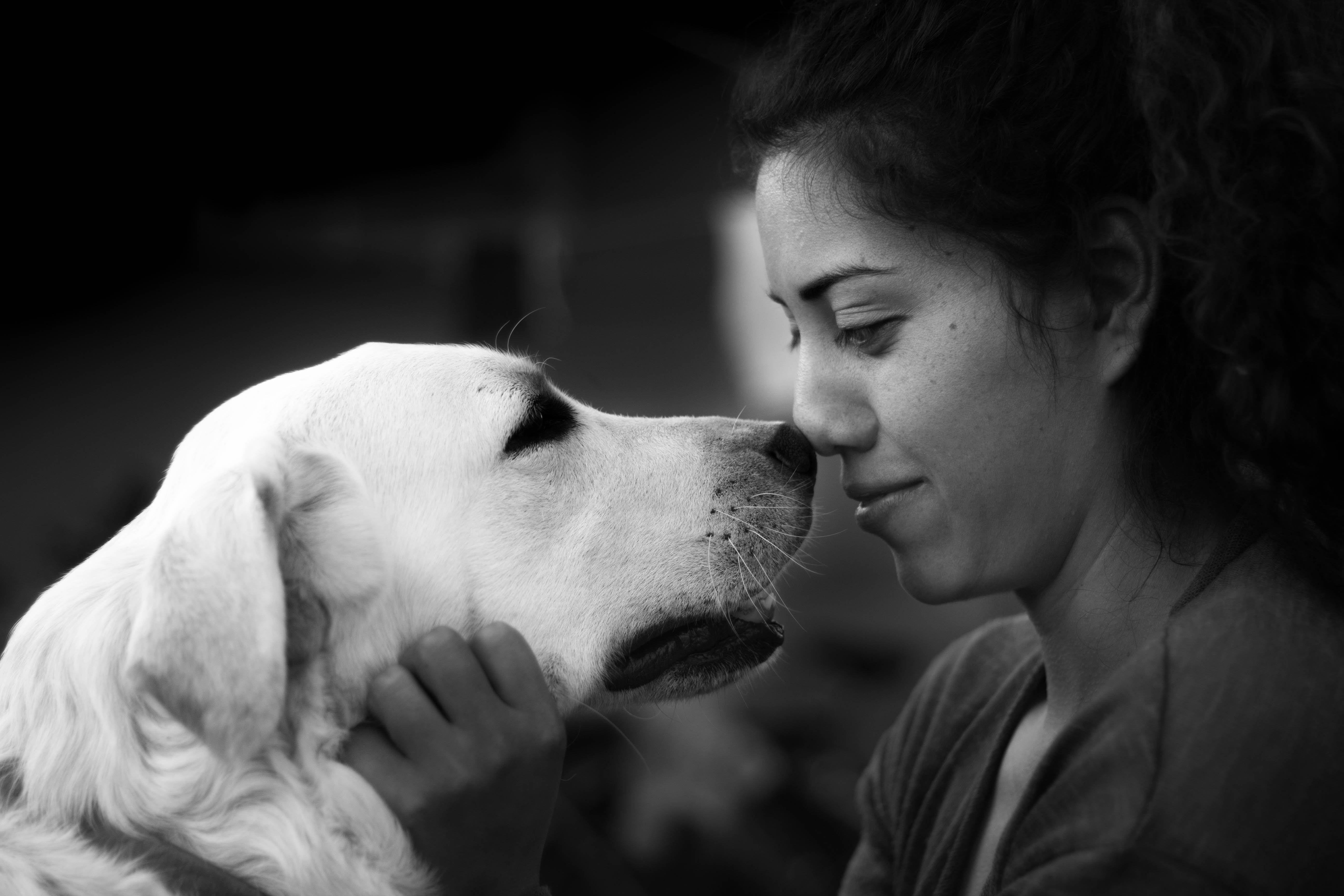
A dog calmly sits beside an introspective person.
Adaptive Complexity Leadership (Adjustment, not dominance)
Adaptivity allows:
- Real-time response to a changing environment
- Reading movement and energy, steadiness, empathy, shared rhythm
- Listening deeper
(20 secs)

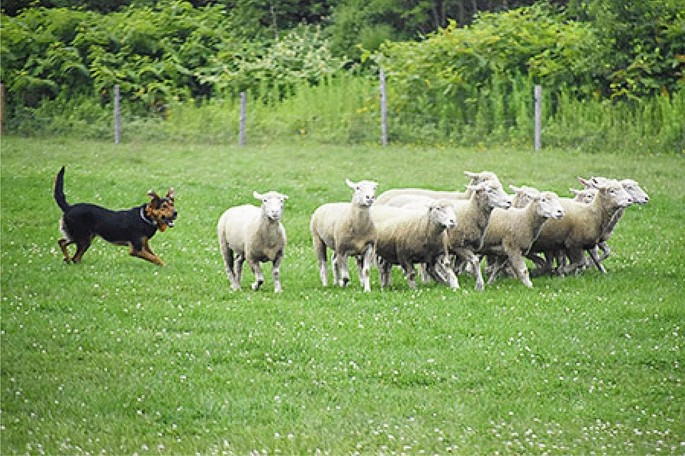
A herding dog adjusting to sheep that suddenly scatter.
Distributed Leadership Across the System – (Not one hero) carries the load
Complexity leadership depends on distributed initiative.
- Action without waiting for centralized approval.
- Discipline, motivation, and trust are not opposites. They are partners.
- Even the lead sled dog relies on the team. Remove one dog, and the system shifts. A sled team does not depend on one heroic dog.
(34 secs)

A sled team pulling together.
Emergence Through Interaction
Functional relationships allow:
- Innovation from interaction, not instruction.
- Novel behavior emerges in relationships with others.
- Play is the birthplace of adaptation. Pure complexity.
- Creating space for others to grow
- The leaders encourage productive interaction and prevent destructive dynamics.
(30 secs)

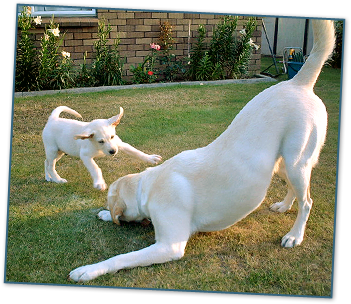

Dogs learning from each other during play.
Linking Systems Between Worlds
Inter-(professional, species) understanding allows:
- Leaders to bridge formal structure and adaptive response.
- The most effective leaders to translate between worlds.
- Partnership: The handler cannot smell what the dog smells. The dog cannot command the system.
- Linking systems to create capability.
(30)

Search-and-rescue dog signaling handler.
Finale
Control reduces complexity.
Trust and interaction harness it.
Complexity cannot be commanded.
It must be understood.(18 secs)

Deborah Acker
Deborah Acker, JD, DNP, MSN, CNM, FACNM | Healthcare Systems & Workforce Innovation | Education | Clinical, Legal & Academic Integration | Rural & Perinatal Care


You May Also Like
